Why ActionQuest?
What is ActionQuest?
ActionQuest is an immersive summer experience for middle and high school students where teens live in small, co-ed crews and rotate through real roles like skipper, navigator, chef, and mate. Students learn practical seamanship, tropical marine biology, and scuba skills through daily hands-on repetition, building toward internationally recognized certifications. Our core programs run in the British Virgin Islands, and the experience blends time under sail, time on and under the water, and time exploring ashore. The result is more than an amazing summer. Students come home more skilled, capable, confident, and grounded in responsibility.
What makes ActionQuest different from other teen summer programs?
Many programs offer adventure. Few combine adventure with authentic responsibility and a proven leadership ecosystem. At ActionQuest, students live aboard in small crews and rotate through real jobs that affect the whole group, which creates natural accountability and growth. They build measurable skills with clear progression paths that culminate in recognized certifications. Our staff culture is also a key differentiator: career educators and maritime professionals who coach teens in real moments, not just during planned “leadership activities.” Add in the digital reset of phone-free time, and students form deeper friendships and stronger social confidence.
What is the real value of an ActionQuest summer beyond the activities?
The activities are the vehicle, but the transformation comes from the crew environment. Students learn what it feels like to be counted on, to follow through when tired, and to make choices that affect others. They develop situational awareness, communication skills, and the ability to solve problems calmly under real conditions. With phones away, students practice genuine social connection and conflict resolution, not just co-existing in the same space. Families often describe it as fun on the surface, meaningful underneath, and lasting long after the summer ends.
What does “intentional leadership” mean at ActionQuest?
At ActionQuest, leadership isn’t a title. It’s a set of behaviors students practice every day. Crew roles naturally create moments where students must communicate clearly, support others, and make decisions that affect the whole boat. Staff coaches those moments in real time, helping students learn how to lead themselves first, then lead within a group. Over time, students learn that leadership is less about confidence and more about competence, character, and consistency.
How does ActionQuest help teens grow in confidence, independence, and responsibility?
Confidence grows fastest when teens earn it through competence. At ActionQuest, students practice real responsibilities daily, build practical skills, and experience the consequences and rewards of follow-through. Staff provide structure and coaching, so students aren’t overwhelmed, but they also don’t remove every discomfort. That balance helps students develop independence without being thrown in the deep end. Over time, responsibility becomes part of who they are, not something they do only when asked.
What do students really take away from the ActionQuest experience?
Students leave with more than stories. They leave knowing they can contribute, lead, and handle challenges without needing constant rescue. Through daily repetition and coaching, most students earn PADI (Professional Association of Diving Instructors) scuba certifications and IYT (International Yacht Training) sailing certifications (depending on their program track and readiness), which gives them tangible proof of what they can do. Just as important, they learn how to work with different personalities, communicate under pressure, and solve problems as a team. Parents often notice real changes in maturity, self-management, and follow-through.
What do parents usually notice after their child comes home?
Parents often describe their teen coming home “different in a good way.” Students tend to show more follow-through, greater independence, and a stronger ability to overcome challenges. Many come home with improved communication, better awareness of how their choices affect others, and a more grounded confidence. Parents also notice the social benefit of the digital reset: teens often feel more comfortable in real conversations and more capable in group settings.
Why do families feel ActionQuest is worth the investment?
Families aren’t just paying for activities. They’re investing in a proven environment where teens build competence, character, and confidence through real responsibility. The program is immersive and structured, with small crews and staff who are trained to coach both skill development and group dynamics. Students don’t just “have fun,” they develop measurable skills, earn real certifications, and gain a stronger sense of who they are. The value shows up long after the summer, when parents see better judgment, stronger independence, and more confidence.
Fit & First-Time Concerns
Who is ActionQuest for?
ActionQuest is a great fit for teens who like being on the water, want to try something new, and are open to being part of a team. Students don’t need prior experience, but they should be willing to participate, contribute, and try. Some students arrive confident; others arrive nervous. Both can thrive when they’re open to the experience.
What age students is ActionQuest designed for?
ActionQuest programs are built for middle school and high school students, typically ages 12–18 (most commonly 13–17) at a stage where they can handle meaningful independence with structure and support. Students are grouped in age-appropriate ways so the social and maturity dynamics work well on board. If you’re unsure which program is the best fit, the right answer usually depends on the student’s age and whether they have any prior experience with sailing or scuba.
Is ActionQuest a good fit for my teen?
The best fit is less about “experience” and more about mindset. Teens do well when they’re willing to try, contribute, and be part of a team. Students who want to be active, learn new skills, and build friendships tend to thrive. If you’re unsure, the most helpful question is whether your teen is open to a shared, team-based experience.
What kind of student thrives at ActionQuest?
The most successful students don’t have to be the most outgoing, they have to be willing. Willing to try, willing to help, willing to engage when things feel new. Students who lean into teamwork and take coaching well tend to have the best experience. The program is designed to help teens grow into the environment, not arrive as “finished products.”
Does my teen need to be athletic or especially adventurous to enjoy ActionQuest?
ActionQuest is physically active, but it’s not designed for only the “most athletic” teens. What matters more is the willingness to participate and try new things. Staff teach skills step-by-step and help students build confidence over time. Many students surprise themselves with what they can do by the end.
Do most students come alone or with friends?
Coming solo is normal at ActionQuest, and many students say it becomes one of the best parts of the experience. The crew structure makes it easier to connect quickly because students live close together. Friend groups form fast, and students don’t have to “break into” an existing social circle. That said, friends are welcome too, just not too many on one boat.
Can friends come together?
Friends are welcome, and the program can often accommodate requests to be together on the same boat. At the same time, we want every crew to bond as a team and ensure all students integrate socially. The goal is a healthy balance: supporting friends without creating “closed circles” that make it harder for others to connect. In many cases, friends end up expanding their social world rather than shrinking it.
What if my child is excited but nervous, shy, or new to this kind of experience?
Most students feel some nerves at the beginning, especially if they’re coming alone or trying something new. Staff are experienced at helping students integrate, find their footing, and build confidence through small wins early on. The crew environment creates structure and belonging, which reduces the “where do I fit?” anxiety fast. Many shy or nervous students end up thriving.
What if my child gets homesick?
ActionQuest is a totally new environment, so homesickness can happen, especially in the first few days, but it usually passes quickly once students feel connected and engaged. Staff are trained to help students get involved and build connections through interactions with their team. The crew environment also helps because students are rarely “alone with their feelings” for long. Most students move through it and come out stronger.
How do you help new students settle in and feel part of the group?
Belonging isn’t left to chance at ActionQuest. Students join a small crew with shared routines and shared goals, which naturally creates connection. Staff pay attention to group dynamics early and help students find their place through participation and encouragement. Most students feel far more comfortable after the first couple of days.
Daily Life & The AQ Experience
What type of boats do we live on?
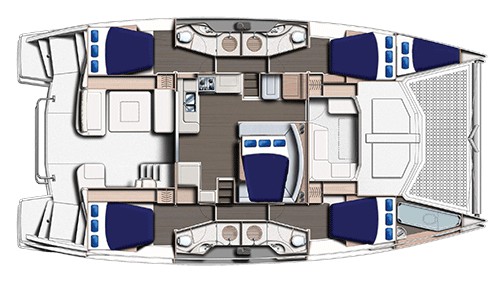
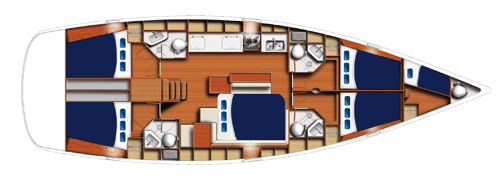
Our BVI programs typically operate aboard traditional double-hulled sailing yachts (catamarans), though we also use monohulls (single-hull vessels) when available. We use only high-quality charter yachts, generally in the 50-foot range. Each vessel has five cabins, a large salon that converts into a sixth sleeping space, and four full bathrooms (heads). The yachts are maintained to a high standard by Moorings/Sunsail, the world’s largest charter company.
What are the sleeping arrangements like?
From the moment you arrive, you’ll move aboard your yacht and live on board full-time. Boat living is tighter than home, and cabins are shared and assigned by gender. To keep things clean and comfortable, students use a sheet sleeping bag (like a lightweight sleeping liner) for hygiene and to maintain a bit of personal space. Think of it like camping, just on a boat. Each yacht has five cabins and a salon that converts to a sixth sleeping area, so there’s enough room for everyone to sleep below when needed. And because most nights are clear and dry, many students love sleeping out on deck in a hammock under the stars.
What is a typical day at ActionQuest like?
No two days are identical, but most follow a rhythm: breakfast, a plan for the day, time under sail or moving between islands, and a mix of on-water (waterskiing, paddleboarding) and underwater (scuba) activities, as well as some time ashore about every three days. Students rotate through daily responsibilities with their crew, which keeps boat life running smoothly and builds teamwork. There’s also downtime built in. Swim time, games, relaxing, and social time with the group. Staff keep the pace active but balanced so students feel challenged, supported, and engaged.
What is life on board like for students?
Living on a boat turns everyday moments into part of the experience. Students share space, collaborate, and build strong friendships because they’re living life together. Meals, activities, responsibilities, and downtime. It’s comfortable but not luxurious; it’s real boat life, which is part of what makes it memorable and meaningful. Staff help set expectations early so the crew functions well and everyone feels included.
How many students are on each boat?
Most ActionQuest boats carry 10–13 students, which is a sweet spot for both learning and community. It’s big enough to create a fun, energetic crew, and small enough that every student stays involved. Small crews also make it easier for staff to coach students closely and for friendships to form naturally. Exact numbers can vary slightly by session and fleet size, but the goal stays the same: a tight crew where everyone matters.
What is the student-to-staff ratio?
Because students are living and learning in a dynamic environment, staff support matters. ActionQuest is designed around a 4:1 to 6:1 student-to-staff ratio, so students aren’t just “watched”, they’re actively coached, mentored, and supported throughout the day. This ratio helps us maintain strong supervision on the water and ashore, deliver higher-quality instruction, and build a positive crew culture where issues are addressed early and students feel known. Exact ratios can vary by vessel, fleet setup, and activity, but the intention stays consistent: strong supervision, strong instruction, and a strong culture.
How do you split up the ages across the boats?
Since most ActionQuest programs operate as a fleet of yachts sailing together, we’re able to assign students to boats in a way that considers many factors, including age, grade, gender, and previous experience. In most cases, students can expect to be berthed with other teens who are close to them in age and grade, typically within about a year (plus or minus). This helps crews feel socially cohesive and allows everyone to progress at a similar pace. If your family has specific considerations around age grouping, reach out, and we’ll talk it through.
What are the bathrooms like on board?
There are four bathrooms (called marine “heads”) aboard each boat, each with a shower and a toilet. They’re single-person and smaller than what you have at home, but totally manageable once students learn the routine. Staff explain how everything works on day one, and crews follow clear expectations to keep shared spaces clean and functional. Students adapt quickly, so this becomes “normal life” within a couple of days.
How do showers & hygiene work during the program?
Staying clean and healthy is a big deal in our environment. It’s hot, we’re living close together, and even crystal-clear Caribbean water can contain bacteria that can be an issue if it gets into cuts or abrasions. For that reason, the expectation on board is that everyone showers daily. At the same time, water conservation matters, so showering typically happens in two ways: “ocean showers” and “down below showers”. Most days we do ocean showers, which means jumping in from the transom to get wet, lathering up with soap once back aboard, jumping back in to remove the suds, and then doing a quick fresh-water rinse onboard. Down below, showers are like what you’re used to at home, just much shorter! We do down below showers when we know we can come ashore to take on water supplies, which is usually about every four days.
Can I do laundry during the program?
To limit how much students need to bring, and for health and hygiene reasons, we send out dirty clothes to be laundered on or around day 10 of the trip, and they typically return around day 12, so students joining us for trips longer than 10 days don’t need to pack clothing and towels to last the entire trip. We also swap out bed linens on or around day 10, too, so students start the second half of the program with a fresh set. In addition, students are welcome to bring a hand-wash detergent to wash small batches of essentials (like swimwear or a few shirts) when the vessels are ashore taking on water.
What happens if a student gets seasick?
The British Virgin Islands offer some of the best sailing waters on the planet, as the ring of islands creates protected waters in the Sir Frances Drake channel while allowing the trade winds to flow freely. As a result, sea sickness is uncommon, but if any student were to feel queasy, it would likely only be on the first day or two as they adjust to life on board a yacht. Most students adapt as their “sea legs” come in. If your teen has a known sensitivity, we’ll recommend planning ahead by bringing a non-drowsy over-the-counter medication.
What responsibilities do students have each day?
ActionQuest is designed around real responsibility, not pretend leadership. Each day, students alternate roles that help the boat function and the crew thrive. From Skipper to Mate, Navigator to Bo’s’n to Engineer to Chef, and to roles that simply support the success of others. These responsibilities are intentionally designed to present challenges: coordinating as a team, staying organized, following through when tired, communicating clearly, and learning to think beyond yourself. With staff as facilitators and coaches, students learn to overcome those challenges in real time. That’s where the growth happens, and why the impact can be profound.
What is the social environment like, and how do friendships form?
ActionQuest is a “community accelerator.” Students bond through shared experiences: learning new skills, working as a crew, laughing through the awkward moments, and celebrating wins together. Because crews are small, students don’t get lost socially, as everyone matters. Staff also pay attention to group dynamics early to support inclusion and a positive culture.
How much free time do students have?
We do keep students pretty busy because that’s how they get the most out of the experience overall, but the program isn’t nonstop intensity. Free time happens every day in natural pockets. Between activities, while sailing from island to island, in the evenings, and during slower moments onboard and while ashore. Students might hang out, listen to music, play games, or just relax. That balance keeps the days full and meaningful while still giving students room to recharge and enjoy it.
What is the food like, and who prepares it?
Meals are part of daily life at ActionQuest. Students prepare food with staff support using ingredients that work well in a small galley and remote locations. The menu is built to be practical: simple to cook, quick to clean up, and satisfying for active days on the water. We use a mix of U.S.-sourced staples and fresh produce picked up locally about every four days. Most meals are eaten onboard, with occasional optional chances to eat at a restaurant during shore time. After enrollment, families share dietary restrictions and allergies; we can often accommodate common needs, but for severe allergies or very specific expectations, it’s best to call before enrolling.
Certifications & Activities
Do students need prior experience before enrolling?
ActionQuest welcomes beginners through to the most seasoned sailors and divers. No experience is necessary for our largest and broadest program. Students learn through hands-on practice, repetition, and coaching from staff. Those with experience can level up, but beginners thrive because the learning is built into daily life on the water. The focus is not perfection, it’s participation, progress, and confidence.
How much sailing instruction do students receive?
Because students are living aboard sailing yachts full time, sailing instruction isn’t confined to a classroom block, it’s constant. Staff teaches skills in the context of real sailing: risk management, teamwork, lines, sail handling, navigation basics, and good decision-making. Students learn fastest because they practice repeatedly in real conditions. Progress tends to be noticeable within days.
What sailing certifications can students earn?
Most ActionQuest programs include or offer pathways toward sailing certifications through IYT (International Yacht Training). The best way to confirm certifications are possible is to match your teen’s age, program focus, and goals with the right trip on the Adventures page of the website or call us. If certifications are a priority, we can guide you to the best fit.
Do students need prior scuba experience?
No. ActionQuest offers PADI (Professional Association of Diving Instructors) scuba certification training, a structured approach for beginners that builds comfort and skill step-by-step. Students learn in a controlled way under close supervision and instruction. For certified divers, there are lots of opportunities to continue progressing right through to Divemaster, the first professional level.
What scuba certifications can students earn?
We offer PADI scuba certifications from Open Water Diver (the entry-level certification) through to Divemaster, the first professional level. We also teach a huge range of PADI diver specialty certifications, including Night Diver, Wreck Diver, Research Diver, Search and Recovery Diver, Underwater Naturalist, and about seven more! The certifications we teach vary by program and trip focus, so the best place to compare/contract is on the Adventures page of the website.
How often do students scuba dive?
Students in scuba-focused programs typically dive daily throughout their trip, with a cadence that fits training requirements, weather, and logistics. Diving is balanced with sailing, crew life, and other activities. The priority is always safety and quality, not rushing through dives to hit a specific number.
What if my child is already scuba certified?
If your teen is already certified, ActionQuest can often offer the chance to keep progressing. More dives, more confidence, and advanced certifications depending on the program. Staff will make sure placement and expectations match your teen’s certification level and comfort. Even experienced divers tend to grow quickly because the environment is immersive (pardon the pun) and the learning is constant.
What other watersports and activities are included?
ActionQuest is designed to be a full-on adventure. In addition to sailing and scuba (depending on the program), students often spend time snorkeling, swimming, exploring islands, and doing other watersports as conditions allow. The exact mix varies by session and location, but the experience is always active and outdoors. The diversity keeps the days fun and dynamic.
What if my teen is not a confident swimmer?
Comfort in the water matters for an ocean-based program, but “confident swimmer” can mean different things. To keep things clear and consistent, we use a simple set of water-skill requirements that every student must be able to complete.
Students must demonstrate the following basic water skills:
- Complete a 200-meter (650 ft) continuous surface swim without any swim aids, or a 300-meter (1000 ft) continuous surface swim with mask, fins, and snorkel. If conditions warrant, students may wear an exposure suit as long as they are weighted for neutral buoyancy.
- Comfortably maintain themselves in water too deep to stand by completing a 10-minute swim/float without using any swim aid.
*These requirements may be completed non-consecutively.
If you’re unsure whether your teen is ready, we’re happy to talk it through and recommend the best-fit program options. We’ll be straightforward about what’s appropriate, because safety and good decision-making are central to the experience.
Personal Responsibility
How does ActionQuest teach leadership?
Leadership at ActionQuest isn’t a class, course, or certification; it’s something students practice every day. Teens learn leadership by working as part of a team, taking on meaningful roles, communicating clearly, and following through. Staff actively coach students in how to lead themselves first – being present, and doing what needs to be done, then how to support others. Over time, students learn that leadership is not about being “the loudest” but rather about being dependable and thoughtful.
How do students practice real responsibility at ActionQuest?
ActionQuest is designed so that students aren’t just passengers in their own experience. They contribute to daily responsibilities that keep the crew functioning. Things like cooking the meals, maintaining shared spaces, supporting each other, and showing up for the team. Staff guide and supervise, but students do the real work of participating consistently. That’s where confidence comes from: students realize they can be trusted to contribute meaningfully.
Why is responsibility such an important part of the ActionQuest experience?
Responsibility is the difference between a trip that students are passively part of and an experience they build for themselves. When teens are part of a crew, they learn that their choices matter and that others are counting on them. That creates real buy-in, stronger teamwork, and a deeper sense of accomplishment. It also mirrors real life: you learn confidence by being capable, not by being carried through it. That’s why parents often notice maturity and independence when students come home.
How does ActionQuest support students without “doing it for them”?
ActionQuest is intentionally supportive, but not rescuing. Staff guide students with clear expectations, step-by-step teaching, and calm coaching in the moment. When a student struggles, the goal isn’t to remove every discomfort, it’s to help them learn how to handle it. That balance helps students grow fast. They feel safe, but they also feel ownership. It’s a “we’ve got you” environment, not a “we’ll do it for you” environment.
How do you handle conflict between students?
Living in a close-knit community means conflict can happen, and ActionQuest doesn’t ignore it. Staff are trained to step in early, listen carefully, and coach students toward better communication. Many situations become growth moments. Students learn how to repair, apologize, and move forward. When behavior crosses a line or threatens safety or community standards, we respond firmly. The goal is a culture that stays fun, respectful, and safe for everyone.
Risk Management
Is ActionQuest safe?
Any meaningful adventure comes with real risk, and we are honest about that. The difference is that we build a strong safety culture around the environment, so growth happens with confidence. We use clear procedures, practiced routines, strong supervision, and careful decision-making to manage risk day to day. Our goal is not to eliminate risk, but to manage it so students can learn and thrive.
How does ActionQuest manage risk day to day?
Risk management at ActionQuest is not one single plan, it is hundreds of small, smart decisions made all day long. Staff continuously assess conditions, student readiness, equipment, and group dynamics. We teach students how to operate safely, then supervise them closely as they practice. We use structure, check-ins, and clear expectations so problems do not snowball. The result is an environment that is adventurous, but controlled.
How are students supervised onboard and ashore?
Because this is a dynamic environment, supervision is active, not passive. On boats, staff are present to instruct, supervise, and manage risk management decisions. Ashore, students operate within defined boundaries and expectations, and staff maintain oversight and regular check-ins. The exact approach varies by activity and location, but the principle stays the same: students have freedom within structure. This balance helps teens grow while keeping safety and accountability intact.
What is your approach to water safety and Personal Flotation Devices (PFDs)?
Water safety starts with clear expectations and consistent habits. Students are taught when and why flotation is required, and staff enforce those standards without negotiation. We also emphasize good seamanship, buddy awareness, and situational judgment so students learn to manage risk intelligently. The goal is not just compliance; it is teaching students to value safety as part of competence.
What is your approach to scuba safety?
Scuba diving is an incredible experience, but it comes with inherent risks, so we treat it with the respect it deserves. Instruction and supervision are structured, progressive, and aligned with PADI-defined safe training standards. Staff and instructors assess students’ readiness and comfort, as well as prevailing conditions, before progressing to the next dive site, skill, or certification level.
What medical training do staff members have, and what medical support is available?
Because we operate in an active environment, medical readiness is essential. All staff are trained to handle the common realities of a teen outdoor program: minor injuries, seasickness, dehydration, sun exposure, and routine health concerns. We also have staff with a higher level of medical training for when something goes beyond routine care. While we don’t have doctors on staff, professional medical resources are never too far away. Parents should feel confident that we take both prevention and response seriously.
What happens if a student gets sick or injured, and how are parents notified?
Most issues are minor and can be handled quickly with trained staff and standard protocols. When something requires more attention, we escalate appropriately to professional medical services and keep parents informed. Our goal is calm, competent handling without creating unnecessary alarm. Parents can expect clear communication if a situation is serious, requires outside medical care, or affects a student’s ability to participate normally.
What happens in a serious emergency?
Serious emergencies are rare, but being prepared is important. Staff train for emergency scenarios, maintain communication systems, and follow clear procedures for response and escalation. In a serious event, the focus is on immediate safety and medical response, then communication and coordination. We aim to manage emergencies with speed, competence, and clarity.
How do you handle weather, storms, or hurricanes?
Weather is part of life on the water, and we take it seriously. Staff track conditions continuously and make proactive decisions about routes, timing, and activities. If weather changes, we adjust early rather than pushing through. In severe scenarios, we follow established storm procedures and prioritize shelter, safety, and clear communication.
Can ActionQuest accommodate dietary restrictions and food allergies?
We regularly support common dietary needs, but it’s important to communicate them early because provisioning and logistics matter on boats. Food allergies are taken seriously, and we work to create safe, practical plans. Some needs are simple to accommodate, and some require careful discussion to ensure we can support the student safely. If you’re unsure, we’d rather talk early and be transparent.
Can ActionQuest accommodate medical conditions or special needs?
ActionQuest is a unique environment: dynamic, active, close-knit, and sometimes physically demanding. Many students with manageable conditions thrive, but not every situation is a good match. The right approach is a clear conversation about needs, support requirements, and readiness to participate fully in group life. Our priority is always student wellbeing and overall group safety, and we’ll be transparent about what we can and cannot support. Parents should refer to our Essential Eligibility Requirements for a complete list of what we expect of our students.
What behavior standards do you expect from students, and what happens if rules are broken?
A great program depends on trust, respect, and active risk management. Students are expected to follow the code of conduct, treat others with respect, and contribute positively to the group. When issues arise, staff address them promptly, coach students toward better choices, and apply consequences when necessary. If behavior becomes serious or repeated, we escalate appropriately, including removing a student from the program when required to protect the community. Parents should review our Student Code of Conduct form to learn more about our expectations.
Staff & Culture
Who are the ActionQuest staff?
ActionQuest staff consists of avid world travelers, qualified instructors, and fun and experienced facilitators and educators. They’re not just “camp counselors,” they’re instructors, mentors, and role models who help students learn skills, build confidence, and navigate group life. Staff set the tone for the crew: fun, inclusive, and accountable. Families often tell us the staff are one of the biggest reasons students feel safe, supported, and challenged in the right way.
What qualifications do ActionQuest instructors have?
While some staff hold a professional yachting license, others may be a professional scuba instructor, marine biologist, emergency medical technician (EMT), or Wilderness First Responder (WFR). Some staff possess a range of professional certifications. Technical ability matters, but it’s not enough on its own. ActionQuest instructors are chosen for competence on the water and for the maturity, communication skills, and temperament required to lead teens well. They’re trained to teach, supervise, and manage group dynamics—not just run activities.
How are staff selected and trained?
ActionQuest hiring is intentionally selective because the staff defines the experience. We look for people who are skilled, trustworthy, and genuinely good with teenagers. Training prepares staff not only for operations and safety but also for building inclusive crews, coaching leadership, and handling real situations calmly. By the time students arrive, staff are aligned on expectations, communication, and the standards that keep the program strong.
What makes an ActionQuest instructor different from a typical camp counselor?
Because ActionQuest takes place in a real outdoor, on-water environment, staff must do more than “supervise.” They instruct skills, manage safety decisions, and build a crew culture where teens can thrive. They also coach students through challenges, social, emotional, and practical, without taking over the experience. The result is a staff team that feels fun but is highly competent.
Communication & Phones
How do students communicate with home?
ActionQuest is designed to help teens connect deeply with their crew, their environment, and themselves, which is hard to do when they’re constantly on their phones. For these reasons, we actively limit phone use to roughly once per week, but students write a daily trip log that gets posted on our website, along with pictures of the students and the activities, so parents can live vicariously! That said, we understand parents want to stay informed, so our team is available 24/7 if needed. The overall goal is a balance: meaningful connection to home without turning the program into “life on a phone, but on a boat.”
Are cell phones allowed at ActionQuest?
We encourage families to think of ActionQuest as a rare chance for teens to step out of their normal digital routine and become more present, confident, and socially connected. Many programs handle phones in a structured way: students may travel with them, confirm safe arrival, and then phone access is limited to about once every seven days to keep the program immersive.
Is there Wi-Fi?
Because of the locations we operate in and the nature of boat-based programming, Wi-Fi is limited and not intended for regular student use. We don’t build the student experience around being connected. During the times when cell phones are allowed, students typically connect ashore using shore-side Wi-Fi or their own cellular data, depending on location and service. Families should plan on limited access overall and treat connectivity as occasional rather than reliable. Your pre-trip materials will spell out what to expect for your specific session.
How often can students call home?
We’ve found that structured communication works best for everyone. Teens settle in faster, homesickness often decreases, and parents get more meaningful updates when calls are planned. The exact timing depends on the session and itinerary, but it usually works out to be about once every seven days. Families are given guidance so they know what to expect. If something important comes up, we can communicate outside the normal cadence.
How do parents contact the program during the summer?
You’ll receive clear instructions before the program begins on how to reach our team. We prioritize being reachable for real needs without making the experience feel like a “remote-controlled summer.” If a parent needs to get a message through, we can help route it appropriately. In urgent cases, we have escalation paths to ensure communication happens quickly.
Will parents receive updates and photos?
We understand that parents want reassurance and a window into the experience. All programs provide structured updates and photos through our Trip Logs which are written by the students daily and then posted to the website when time and resources allow. The goal is to keep you informed while also preserving the integrity of the student experience. If your teen is thriving, the updates will reflect that; if a concern arises, you’ll hear from us directly.
About Travel
How are flights arranged?
Students come from all points of the compass, so coordinating travel is a big responsibility. While we don’t include travel costs in our tuition, we work closely with you to ensure you select an itinerary that works for both you and the program. For this reason, we teamed up with a travel professional to help you book flights, arrange group seating, and provide close monitoring on travel days in case of flight difficulties. Of course, parents are also welcome to book travel without our assistance, so long as the arrival and departure times fall within defined ranges.
Do staff meet students at the airport?
Meeting procedures depend on the program logistics, but the key principle is consistent: students begin the program when they physically connect with designated staff at the pre-designated meeting location. Those details are communicated during onboarding and pre-departure correspondence, so families know exactly what to expect. For students interested in a program in the British Virgin Islands, a more detailed explanation is available on the website HERE and in this “Getting to the BVI” document.
Do students need a passport?
Yes. For international travel, your teen must have a passport that is valid for the required period beyond the program dates. Families are also responsible for any visas, travel authorizations, and meeting entry/exit requirements for every location involved.
What happens if a flight is delayed or missed?
Flight delays happen, and the best response is to communicate quickly and plan calmly. Our team is on standby throughout any travel day to react to any interruption. With close to 40 years of experience, we’ve seen (and overcome) it all!
Packing & Gear
What do students need to bring for ActionQuest?
ActionQuest packing is less about “bringing everything” and more about bringing the right things. Students live in close quarters and spend most days in swimwear, sun protection layers, and simple, quick-dry clothing. You’ll receive a program-specific packing list in your pre-trip pack that tells you everything you need, most of which you’ll likely already have in your closet.
Do students need special sailing or scuba gear?
Most students don’t need to bring specialized gear beyond the basics. However, for programs that include scuba instruction, students are required to bring their own mask, fins, and snorkel for comfort, fit, and hygiene, as well as an underwater timing device (watch). We’ll clearly outline what’s required versus optional for your specific trip in the packing list you’ll receive before the trip.
Can students bring phones, cameras, or laptops?
Phones are a great thing to have for travel day and arrival logistics, but once students are settled in, they’re collected and stored by staff in accordance with our communication device policy so the experience stays focused and distraction-free. Cameras are absolutely encouraged if your teen wants to document the trip, though it’s worth remembering that boat life is wet, active, and hard on gear, and charging options can be limited, so simpler tends to work better. We ask that families don’t send drones without calling us first, and we don’t allow laptops or tablets because they aren’t needed and don’t hold up well in this environment. If your teen loves to read, a dedicated e-reader is a great alternative.
Tuition & Insurance
How much does ActionQuest cost?
ActionQuest Tuition depends on the specific session and program focus. Because programs differ in length, location, and certifications, there isn’t one “universal” price. All tuitions are displayed in the individual program web pages.
What does tuition include?
Tuition is designed to cover the essential structure of the program, so families aren’t constantly surprised by “required add-ons.” In general, that includes the day-to-day experience of being in the program: trained staff supervision, instruction, meals, accommodations, and scheduled activities that define the program. Some program elements may vary by session, so we’ll always clarify what’s included for your specific program.
What is not included in tuition?
Most families should plan for a handful of additional expenses outside tuition. These usually include airfare, personal spending money, PADI scuba books, some personal gear items (mask & snorkel), and any insurance or travel protection you choose to purchase. If there are any required add-ons for a specific session, we’ll outline them clearly before you commit.
Are flights included?
Since students come from all points of the compass, travel to and from the program start location is not included in the tuition.
How much spending money should students bring, and what is it typically used for?
Spending money is mostly for optional, personal choices—snacks, souvenirs, the occasional meal ashore, and incidentals during travel. Some students spend very little; others enjoy having more flexibility. We recommend families choose an amount that matches your teen’s spending habits and your comfort level, and we’ll share guidance that reflects the realities of the specific program.
When is tuition due, and is there a deposit?
To hold a student’s place in a session, we require a deposit at enrollment. Because families enroll at different points in the year, the deposit amount and the tuition payment schedule are tied to timing—specifically, how close your enrollment date is to the start date of the program. In general, the closer you enroll to departure, the more of the tuition may be due sooner. The exact deposit amount, due dates, and timing rules are laid out in the Participant Terms and Agreements.
How much is the deposit, and when does it become non-refundable?
A deposit is payable upon enrollment to hold your space until final tuition is due. The deposit is $1,000 if you enroll before March 1 in the year of your program, and $1,500 if you enroll on or after March 1. Because we begin staffing and making commitments well in advance, seventy-five percent (75%) of the deposit is refundable up until January 1 in the year of your program. After January 1, all deposits are non-refundable.
What payment methods do you accept?
Families can pay using common non-card methods (like ACH/check/wire) and in many cases can also pay by credit card, but we do not accept American Express. When paying tuition, credit cards typically include a 3% added processing fees, which means the “credit card total” may be slightly higher than the non-card total. We keep payment instructions clear so families can choose what works best.
Do you offer payment plans?
Some families prefer a structured payment schedule, and we may be able to accommodate that depending on timing and the session. Payment plans work best when arranged well in advance, not at the last minute. The key requirement is that the balance must be fully paid by the applicable deadline for the program.
Do you offer discounts?
Yes, we do offer discounts. Each year we run an early enrollment discount from early September through the end of the year, with the highest discount available before October 31. We also offer a 5% multi-trip discount for families enrolling in more than one trip, whether that’s the same student doing multiple programs or multiple students from the same family attending in the same year. Beyond that, any additional discounts (if offered) are typically tied to limited promotions. Because sessions can fill, early enrollment is often the best value, and if a discount is available, we’ll either email you or you’ll see a promotional banner on our website.
Are scholarships or financial aid available?
Yes. Each year ActionQuest awards a limited number of partial tuition scholarships for summer programs, and eligibility is based on a mix of factors that can include financial need, merit-based considerations, and promise of success on the adventure. Because funding is limited, we recommend starting the scholarship conversation early. Also, submitting a scholarship application does not reserve or hold a space, so families should plan accordingly if a session is filling. If you’re offered a scholarship and accept it, you’ll then complete the standard enrollment application and submit the required deposit using the scholarship code provided. Scholarships apply to tuition only (not flights, spending money, or other travel-related costs). Full details and the application link can be found HERE.
What is your cancellation and refund policy?
Program planning requires major commitments before students arrive, so refund policies are based on time. Deposits usually have a limited window during which a portion may be refunded, after which it becomes non-refundable. Tuition typically becomes non-refundable after the tuition due date. The closer you get to the program start, the fewer recoverable costs exist, so policies tighten accordingly. This is why trip cancellation insurance is important to consider. Exact details can be found in our Participant Terms and Agreements.
What happens financially if a student leaves the program early?
If a student leaves early, whether for medical reasons, personal reasons, or dismissal for conduct, refunds are not issued. In addition, early return travel logistics can create extra expenses, and families are also responsible for those costs. We’ll help coordinate responsibly, but the financial responsibility will remain with the family.
What happens if a program is disrupted or canceled by weather or unforeseen events?
Weather and unforeseen events are part of international programming, and safety always comes first. If a program is disrupted, plans may change: routes, activities, or schedule adjustments are sometimes required. If a program is canceled, the resolution depends on the reason and when it happens. Options may include transfer to another session, credit/voucher, or refund in certain circumstances. We communicate clearly and aim for a fair, consistent process. More details can be found in our Participant Terms and Agreements.
Do families need travel insurance / travel protection?
Travel protection is a smart way to reduce exposure to things no one can control: illness, last-minute travel disruptions, and other unexpected events. Policies vary a lot, so families should read coverage details carefully and choose what matches your concerns. We recommend considering travel protection as part of responsible planning and more details can be found on the Travel Protection page of our website HERE.
Do students need medical insurance?
Yes, because ActionQuest is an international program with students themselves coming from all over the world, every student is required to carry medical insurance that will cover them in the program destination. In addition, we require an International SOS/MedAire membership for the duration of the program. That membership is added as a separate line item to your tuition and provides off-site medical support and emergency evacuation coordination for remote environments. It’s important to note that MedAire membership is not medical insurance and does not replace a student’s own medical coverage.
For more details on our medical support and evacuation coordination visit our Risk Management page HERE.
Who is responsible for medical costs and early return travel costs if needed?
If a student needs medical care beyond routine first aid, additional costs can occur: clinic/hospital fees, transportation, accommodations, and sometimes special travel arrangements. Those costs become the family’s responsibility. Our job is to respond quickly, coordinate responsibly, and keep parents informed, but the underlying expenses remain with the family.
Can we switch to a different session/program after enrolling?
Families sometimes need to switch sessions because of schedule changes. When space exists, a switch may be possible, especially earlier in the cycle. If the new session costs more, families pay the difference; if it costs less, any credit/refund depends on timing and policy cutoffs. The earlier you request a change, the more flexibility you typically have.
What are the next steps to explore programs and apply?
The best next step is to explore the available program options and choose a short list that matches your teen’s age, interests, and readiness. From there, request information and connect with our team to confirm fit, answer questions, and align on logistics. Once you’re ready, you’ll complete the enrollment steps and secure your spot with the required deposit. After enrollment, you’ll receive the pre-departure checklist so your family can stay on track with forms, planning, and travel.