What is the main focus of the Dolphin Voyage?
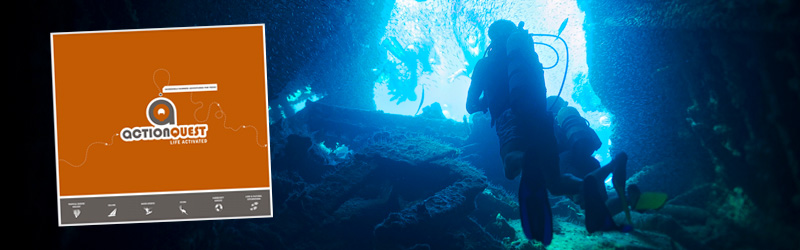
The Dolphin voyage is designed for students with a strong interest in Marine Biology. During the program, we conduct research on the reefs while furthering our diving certifications and learning to sail. Other water sports include water skiing and wakeboarding. The program is open to students 15 and older, who already hold a basic diving certification or PADI referral. You'll earn four different diving certifications during the program and, off the water, we'll visit the islands, explore the towns, cook out on the white sand beaches and hike to the top of the tallest mountain.
What certifications will I earn?
During the Dolphin Voyage, you'll earn four different scuba certifications, the PADI Underwater Naturalist Diver, Underwater Photography Specialty, and Night Diver Specialty, as well as the PADI Research Diver, a certification unique to ActionQuest. Beyond these certifications, you'll learn a lot about Tropical Marine Biology and Oceanography. Outside of the diving and Marine Science, you'll also gain experience in sailing, water skiing and wakeboarding.
How many people go on this program?
The Dolphin Voyage sails as part of our advanced diving voyages, and there will be up to four boats sailing together in a flotilla, each with 10 to 13 shipmates aboard. This allows us to berth teens aboard based upon their age and grade. It's a lot of fun sailing as part of a larger fleet, where you can interact with many other teens and staff from all over the world. For other advantages of Flotilla Sailing, please refer to the specific sections in the general FAQ's
What type of boat will I be on?
The Dolphin Voyages are run aboard either our large catamaran or monohull sailing yachts. We use only the finest charter yachts available, all of which are in the 45+ foot range. Typically, we use the Fountaine Pajot Bahia 46 catamaran. Each Bahia 46 has 8 separate sleeping areas, a large salon which converts to a 9th cabin, and four full bathrooms (heads). The world's largest charter company, Sunsail, maintains all of our yachts to the highest standard.
Where do we all sleep?
From the moment you arrive, you'll move aboard your yacht and live on board full-time. If you've never lived aboard a yacht before, you'll find that there are a lot of differences to living on land! What's the head? Where's the lazarette? How do you pump the bilge? All the boats have multiple cabins and a large salon that converts to an extra sleeping area, so there's enough room for us all to sleep down below if it should rain, but, for the most part, the evenings are clear and dry and most of us like to sleep out on deck, swinging in a hammock under the stars.
Who will be my staff?
Two or three staff members live with you aboard your vessel full-time. There will be your skipper, your first mate who is typically your diving instructor, and a third staff member who could also be a diving instructor, EMT, Marine Biologist or someone with other special skills. Take a look through the staff section within the general FAQs for more information on the ActionQuest staff.
What's the weather like?
The short answer to this question is, GORGEOUS! Well, usually anyway! In the British Virgin Islands, the trade winds blow a steady 8-14 knots and the average summer temperature is 83°F with 76% humidity and 81°F water temperature (South Florida by comparison averages 89°F with humidity of 87%.) What's great about the BVI weather is that there is always a breeze, so it feels very comfortable almost all the time. Yes, it does rain now and then but it is more of a tropical shower, lasting only a few minutes, rather than a complete day of rain.
Can I call home?
Yes, we are in port where public phones are available on average every 4 days or so and we encourage students to call at every opportunity. However, we do not require this, as our staff are usually busy with other activities such as stocking the boats with fresh food over this time. The old saying "you can lead a horse to water..." comes to mind, as some shipmates call home every time and some never call! In the BVI there are ample opportunities, and the phone service is pretty reliable.
How will I pay for calls home?
There are a few different methods to call home. We have found the cheapest way is to purchase a local phone card. These can be purchased at local stores or directly from the program director. Other methods include using a credit card, AT&T Calling Card (or other major calling card), and on some phones you may even be able to call collect. These other methods are expensive which is why we recommend using a local calling card.
How can parents find out what's going on aboard the program?
The easiest way is for shipmates to place a quick call home to let Mom and Dad in on what's going on! Sometimes this doesn't happen though so, in 2004, we instigated a trip update system in which, at the end of each day, the shipmate skipper of the day writes a few remarks in the log. At various times (typically once every 3 or 4 days) this is typed up and posted on the ActionQuest website. This way, Mom and Dad can vicariously live aboard too!
Can I get mail on the program?
Typically not, since mail can take up to three weeks to make it to the BVI. Of course, with us being out on the water and in a different location every day, this adds a further dimension to the dilemma!
Can I email home from my program?
Our vessels do not have computers or Internet connectivity, so email contact will be very limited. There may be a couple of times when we are ashore and it might be possible to send an email or two from Internet Cafes.
Do I need any specific immunizations for this program?
No special immunizations are required to visit the BVI. We do ask that all students check that their Tetanus and Hepatitis B inoculations are up-to-date.
What about the travel arrangements?
Students come from all points of the compass! (typically, around 11 countries and 35 states are represented), so coordinated air travel is of vital importance.
For this reason, we highly recommend that students flying to the Caribbean book through Leah Hernandez at Reservation Services International as she regularly obtain the best fares available, arranges group seating and provides close monitoring on travel days in case of flight difficulties. As airlines often change their schedules, ActionQuest cannot be responsible for the coordination of air flights that were not booked through Leah.
For those booking through Leah, ActionQuest staff assist with flight changes in San Juan, meet flights at the Tortola airport and arrange for ground transportation for all Caribbean programs.
For more information on flight itineraries and travel information, please contact...
Leah Hernandez
Reservation Services International
Tel. 800.329.9000
(Texas 281.528.7727)
Email.
leahctn68@hotmail.com
Can I use frequent flyer miles to get there?
Sure, those students joining us for a Caribbean program may use air miles, but do book early to get the itinerary that works for both you and your shipmate. In the past, parents have booked itineraries on air miles that have students transferring though San Juan late at night, when we have no staff supervision. In this case, we would suggest purchasing a ticket that allows for arrival a reasonable time on the travel day.
Do I need a passport or any special visas?
All shipmates traveling to the BVI need to have a passport which is valid for a minimum of six months after the date of departure from the BVI. Visitors from certain countries other than the US. UK and Canada may require visas. To confirm whether or not a visa is required, please call us or contact the Chief Immigration Officer, Government of the British Virgin Islands, the nearest British Consulate or the nearest BVI Tourist Board Office.